
Are you or someone you love planning to retire in Thailand? Do you know that there are many retirement homes available here at a fraction of the price of what it would cost in your home country?
Here in Thailand, you’ll find retirement homes that cater to those with special needs, while some cater to those who want to spend the later stages of their lives in a peaceful environment with similarly-aged people.
In this article, Thailand Starter Kit guides you through the entire process of choosing a retirement home in Thailand, including where to find the right place, the available services that each home comes with, how to check a home is properly licensed, and what to consider when choosing a home.
Disclaimer: Some links in this article go to our partners, and we may earn a commission if you use them. It costs you nothing extra, and we only recommend services we'd use ourselves. Read more in our Advertising Disclosure.
Contents
- Key Takeaways
- Why Thailand?
- What to Expect from Thailand Retirement Homes (Elderly Care Homes)?
- Where to Find Retirement Homes
- Available Services
- Duration
- Costs
- Deposits
- Can You Afford a Retirement Home on a Thai Retirement Visa?
- Choosing the Right Retirement Home
- How to Vet an Elderly Care Home in Thailand
- Recommended Retirement Homes
- Retirement Condos in Thailand
- How About Nursing Homes?
- Does Health Insurance Cover a Retirement Home or Nursing Care?
- If You're Caring for an Aging Spouse
- Now, on to You
- Frequently Asked Questions
- How much does a retirement home in Thailand cost?
- Where are most retirement homes for expats located?
- Do I need a retirement visa to live in a retirement home?
- What is not included in the advertised starting price?
- How much does nursing care cost on top of the room package?
- Are Thai retirement homes regulated?
- Can I move in without a long-term contract?
- What should I check before choosing a retirement home?
- Does health insurance cover a retirement home or nursing care?
- Can I hire a private caregiver directly instead of going through a retirement home?
- Sources Cited
Key Takeaways
- Full-service retirement homes in Thailand start around THB52,000 a month before nursing care, a fraction of what comparable care costs back home.
- Chiang Mai has the widest choice of expat-friendly homes, with Pattaya next; Bangkok, Phuket, and Hua Hin offer only a handful each.
- Advertised starting prices usually cover just a shared room and breakfast. Private rooms, meals, nursing, and transport are billed on top.
- Nursing care is a separate line item, running from about THB27,000 a month for a few shared hours a day to THB130,000 for round-the-clock one-on-one care.
- Standard health insurance, including the O-A visa’s mandatory cover, excludes long-term residential care, so fund it from savings or a dedicated policy.
- Facilities are licensed but face no minimum staffing ratio, so visit in person, try the food, and ask how many caregivers work the overnight shift before you sign.
- Ask to see the home’s health establishment licence and count the beds. A Kanchanaburi home lost its licence in October 2026 for operating far beyond its licensed size, and every licensed home in the country is now being inspected.
- Prefer to stay in your own home? Home-care agencies like ElderThai and Health at Home send caregivers from around THB1,200 for a four-hour visit.



Why Thailand?
Thailand is a popular country for retirees for many reasons.
- Cost of Living: First, the cost of living is low. Your money will go a lot further in the country compared to someplace like the U.S. The quality of life is good too: the weather is nice, and people are friendly.
- Healthcare: the healthcare quality in Thailand is among the top in the world. This means you get superb treatment for a fraction of the cost of that in your home country.
- Language: You can live here without having to learn a local language (although learning basic Thai can help you retire here easier).
If you don’t want to rent a house to retire in Thailand, you can opt for one of the many retirement homes throughout the country.
What to Expect from Thailand Retirement Homes (Elderly Care Homes)?
Thailand is a popular destination for retirees from all over the world, and not just for the low cost of living, warm weather, friendly people, or comfortable lifestyle. The country is ideal because of its retirement homes and elderly care homes.
During the past few years in Thailand, developers have been building new retirement homes throughout the country. This gives you the feeling that you’re spending your retirement in a modern vacation residence.
The only difference is that these retirement homes and elderly care homes come with assisted living facilities. This will help make your stay in Thailand much easier. You’ll find out more about this later in the guide.
Retirement homes for expats in Thailand are usually located outside of busy cities. In fact, many of them are located next to mountains and lakes, which means you can enjoy Thailand’s diverse nature. There are, however, buses and vans that could take you to the cities.
They also partner with nearby hospitals to provide in-house healthcare professionals. And, of course, all the staff can speak English.
Where to Find Retirement Homes
There are many retirement homes in Thailand. However, a lot of them are for Thais, including Ban Bang Khae, one of the most famous retirement homes in Thailand.
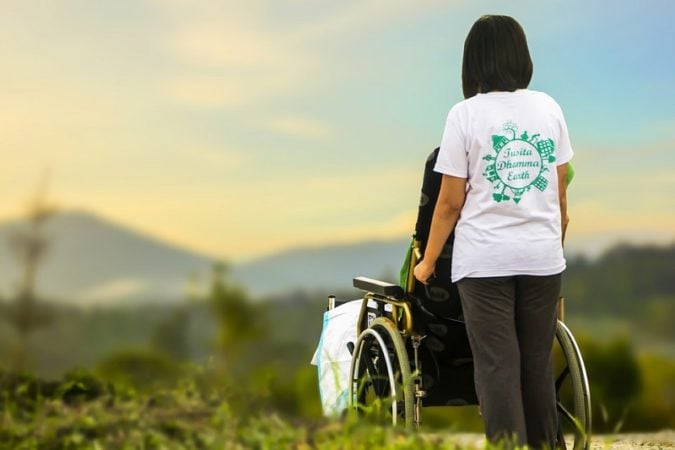
As of now, most of the retirement homes for expats in Thailand can be found in Chiang Mai, and for various reasons:
- Chiang Mai is one of the most popular options for retirees.
- The weather in Chiang Mai is suitable all year round because it’s a mountainous province.
- Many hospitals in Chiang Mai are set up to care for expat patients.
- Being the largest province in Thailand by area, Chiang Mai provides plenty of space and nature.
In addition to Chiang Mai, you can find retirement homes in Pattaya, another popular location for retirees.
Although it’s still possible to find a retirement home in Bangkok, Phuket, or Hua Hin, options are limited. There might only be a single retirement community available in these cities.
On the other hand, there are a lot of nursing services in these provinces.
Additionally, you can find retirement homes in provinces like Ratchaburi and Buriram. And although they can be far from the city, they are spacious and peaceful. These retirement homes are usually located next to mountains and offer fresh air and space for outdoor activities.
Available Services
Let’s look at the services and facilities included with retirement homes in Thailand.
Assisted Living Facilities
Retirement homes in Thailand come with assisted living facilities. You will have access to in-house healthcare professionals who monitor your health with regular checkups. Each room also comes with 24-hour security and telephones or emergency buttons that connect you directly to in-house nurses.
Some retirement homes also offer in-house physical therapists and nutritionists to help you customize your diet. They also offer group activities that will keep both your mind and body healthy. Wheelchairs are also readily available.

Rooms
Rooms inside retirement homes in Thailand usually have CCTV and emergency buttons for calling in-house medical staff.
Other than that, they have similar facilities to hotels. That is, they are fully furnished and may come with a microwave, refrigerator, and small kitchen. Cleaning services are also provided.
Moreover, you can get a shared room with four to six beds or a private room.
Food
Depending on the retirement home, they may offer both Thai and international cuisine. Breakfast is usually included in the package. However, you may have to pay for lunch and dinner.
Facilities
Retirement homes in Thailand usually offer gyms, swimming pools, and outdoor activities. Some retirement homes may also have in-house spa and haircut services. If not, they will arrange for a hairdresser to provide haircut services onsite.
Medical Care
Retirement homes in Thailand usually offer in-house medical staff and physical therapists for general health checkups and treatment. If you have serious ailments, they’ll most likely send you to a nearby hospital for treatment.
Transportation
Most retirement homes have transportation service, including a van or a private driver, when you need to go outside.
Visas
Retirement homes in Thailand that cater to expats usually employ in-house staff that can take care of your Thai retirement visa. They can also help you stay up-to-date with 90-day check-ins and make sure you keep your visa active.
Nursing
Many retirement homes in Thailand also provide nursing services. However, costs for personal nursing services are not usually included in packages.
Full-time nurses usually cost around THB37,500 a month. For part-time support, you’ll pay around THB12,500 per month for eight hours of care per day or THB25,000 per month for 16 hours of care per day.
On a side note, if you move to Thailand, live in your own house, and prefer private nursing services, you can contact retirement homes and ask them if they send nurses to private homes.
You can also go directly through a dedicated home-care agency instead. Bangkok-based agency ElderThai prices a single four-hour visit at THB1,200, a full eight-hour day of coverage at THB2,200, and live-in, 24-hour care at THB3,500 a day, which works out to well over THB100,000 for a full month. Health at Home lists a lower starting price of THB19,900 a month for lighter, part-time support. Agencies typically charge 1.5 to 2 times the rate of hiring a caregiver directly, but you get a trained, supervised, and replaceable caregiver instead of relying on one person with no backup.
Funerals
Don’t be surprised if retirement homes ask you how you’d like them to handle your body after you pass away.
This is actually a common question and usually agreed on before you move into a retirement home. You’ll have to decide if you’ll be cremated, whether or not you’ll have a funeral, or if you’re going to send ashes to family in your home country.
If you don’t decide on these things and pass away, retirement homes will contact your relatives to find out what to do.
If they can’t get in touch with anyone, your body will be sent to a local temple to be cremated, and a monk will perform a chant based on Buddhist beliefs.
Other Services
You can also opt to stay at a retirement home on a short-term basis if you need help while your family isn’t around or when you’re recovering from surgery.
Duration
There are many options available when it comes to the duration. You can choose to stay there a few days during the weekend, a few months, to over six months.
Costs
When it comes to retirement homes in Thailand, there are many factors that affect the costs.

First, costs will mostly depend on your health condition and which retirement home you choose. Prices will increase the older you get. And if you can’t help yourself and/or require a lot of medical assistance, that will raise the cost as well.
On the other hand, if you can help yourself, costs are going to be significantly cheaper since you won’t need to hire a nurse full-time to take care of you.
Retirement homes in Thailand for expats are usually more expensive than for Thais because of the higher salary required for English-speaking staff.
Starting prices for each retirement home are different. For example, the starting price at Ban Sabai Village is around THB52,000 per month, while a more basic home such as Baan Lalisa does not publish a rate and asks you to contact them for a current quote.
The main difference in price comes from facilities, services, location, and luxuries.
As an example of how price scales with room type and care level, here are the published monthly rates at Ban Sabai Village in Chiang Mai for a one to six month stay:
| Room or care level | Monthly rate |
|---|---|
| Standard room (upper / lower) | THB67,000 / THB73,000 |
| Standard Room Plus | THB82,000 |
| Deluxe room / junior suite | THB99,000 |
| Villa / Villa Superior | THB110,000 / THB120,000 |
| Care: shared, 3 to 4 hours a day | THB27,000 |
| Care: up to 8 hours a day | THB44,000 |
| Care: up to 16 hours a day | THB88,000 |
| Care: one-on-one, 24 hours | THB130,000 |
Note that the prices you find on a retirement home’s website are usually the starting price and only include basic services such as:
- shared room
- housecleaning
- breakfast
- gym, swimming pool, and spa
There are additional costs that are not usually covered with the basic package, including:
- private room
- nursing services
- lunch and dinner
- transportation services
- medical services
To get an exact quote for your needs, contact a nursing home. They’ll usually first ask about your age, health condition, and requirements before quoting you a price.
Deposits
Please note that many retirement homes ask for a monthly payment upfront. This means that when you sign a contract, you have to pay for two months in advance: one month for the deposit and another month for the upfront payment.
Deposits vary between each retirement home. In general, a one-month payment is usually required as a deposit. However, some retirement homes may ask for a fixed fee of THB20,000 as a deposit. Again, the exact amount is different between each retirement home.
Can You Afford a Retirement Home on a Thai Retirement Visa?
If you’re a long-term expat in Thailand over 50, chances are you’re living here on a Non-Immigrant O-A or O retirement visa.
To qualify, you need to show immigration either 800,000 THB in a Thai bank account, a monthly income of 65,000 THB, or a combination of both that hits the 800,000 THB mark.
A quick heads-up if you’re using the bank method: there are strict rules on how you manage that money.
- You have to keep the full 800,000 THB in your account for at least two months before you apply for your yearly extension.
- And once you get the stamp, your balance isn’t allowed to drop below 400,000 THB for the rest of the year.
If you use the Non-Immigrant O-A visa, you’ll also need mandatory health insurance. At a minimum, policies require 40,000 THB for outpatient care and 400,000 THB for inpatient care, though some Thai embassies might ask for much higher coverage when you make your initial application. (For the complete breakdown, check out our guide to mandatory health insurance rules for retirees).
When you’re running your numbers, it helps to line these visa requirements up against actual retirement home costs. A full-service retirement home in Thailand generally starts around 52,000 THB a month before any extra nursing care. Since that’s pretty close to the visa’s monthly income requirement, your visa criteria and your actual living costs are sitting in the exact same ballpark.
The takeaway? Don’t budget for these things in silos. Plan for your retirement home, your mandatory insurance, and a solid emergency medical buffer all together as one package.
Choosing the Right Retirement Home
Since there are many retirement homes available in Thailand, the next question is how to choose the right retirement home for yourself.
Actually, there’s no one-size-fits-all when it comes to choosing the right retirement home. No one knows what you need better than you. So, you have to visit each retirement home in person to find out whether you like it or not.
You should talk to staff, check the rooms, walk around, taste their food, and chat with other retirees. You may also want to visit the area several times of the day to find out what it’s like to live there from the morning until the evening.
Location is another important factor. The retirement home shouldn’t be far from your family, assuming you’re living with your family in Thailand. And it should not be far from the hospital that you prefer to visit for treatment.

Last but not least, you should plan your budget well. Make sure you can afford the retirement home and have some spare money for paying unexpected expenses such as medical treatment.
Before you sign, run through this quick checklist:
- Visit in person, ideally more than once and at different times of day.
- Talk to staff and current residents, and try the food.
- Check the distance to your family and your preferred hospital.
- Ask for a full, itemized quote based on your age and health condition.
- Budget for the O-A insurance minimum and a buffer for medical treatment.
- Consider a short trial stay before signing a long-term contract.
How to Vet an Elderly Care Home in Thailand
Every elderly care home in Thailand needs a health establishment licence from the Ministry of Public Health’s Department of Health Service Support (DHSS), and that licence sets how big the home can be and what kind of care it can offer. Checking a home against its own licence is the fastest way to rule out the bad ones.
In October 2026, DHSS shut down an elderly care home in Tha Muang, Kanchanaburi after complaints that residents were being locked up and abused. Inspectors found it using 4,641 square metres of floor space against the 1,600 it was licensed for, and taking in psychiatric patients it had no licence to treat.
Press reports name the home as Sothornchai Nursing Home, say it had 129 beds against 50 approved, and date the licence revocation to 7 October 2026. DHSS then ordered its 12 regional centres to inspect every licensed elderly care facility in the country within two months. That’s roughly 1,200 homes, with 1,203 registered with DHSS at the time.
Run these checks on any home on your shortlist, including one a friend recommends:
- Ask to see the licence. A legal home holds a health establishment licence for elderly or dependent care (in Thai, ใบอนุญาตประกอบกิจการสถานประกอบการเพื่อสุขภาพ), plus a separate licence for the person who manages it day to day. A company registration certificate is not the same thing. Running a home without a licence is a crime, with up to six months in jail, a fine of up to THB50,000, or both.
- Count the beds. The licence covers a set number of residents and a set floor area. Count the beds in the shared rooms and ask how many people live there now. A Nonthaburi home DHSS inspected the same month was licensed for 9 beds, had 14 set up, and was running two unlicensed buildings nearby.
- Find out who’s medically on site. DHSS is clear that an elderly care home is not a hospital and shouldn’t take residents whose needs are beyond what it can handle. Ask whether a qualified nurse is on every shift, which doctor or hospital handles call-outs, and how long an emergency transfer takes.
- Ask for the last inspection result. DHSS and the provincial public health office inspect licensed homes after the licence is issued, and every licensed home is due a visit in the current sweep. Ask what the inspectors found and what the home fixed. Expats reacting to the sweep on ASEAN NOW doubted the checks will continue once the headlines fade, so treat a clean result as a starting point, not a guarantee.
- Turn up unannounced. Book the formal tour, then come back another day without calling ahead, ideally at mealtime or in the evening. Staffing, smell, and how residents are spoken to are hard to fake at short notice.
Walk away if you see any of these:
- Rooms that lock from the outside, barred windows, or beds rigged into cages.
- Shared rooms packed with more beds than the floor space can sensibly hold.
- Residents with severe psychiatric or complex medical needs mixed in with frail elderly residents, and no nurse around.
- No doctor or partner hospital the home can name.
- Staff who won’t show you the licence or the residents’ rooms.
Price is a clue too. Full-service homes in Chiang Mai start around THB52,000 a month, and care hours on top run from about THB27,000 a month. A home quoting a fraction of that for full-time care is saving money somewhere, and it’s usually on staff.
Report a bad home: if a home looks unlicensed, unsafe, or overcrowded, tell the provincial public health office or the DHSS regional Health Service Support Centre for that area. DHSS asks families to do exactly that.
Recommended Retirement Homes
Let’s take a look at your options for retirement homes in Thailand by province.
Most retirement homes in Thailand usually have connections with local hospitals, so this way it’s easier for you to get regular health checkups or see the doctor.
You can also contact a hospital that you regularly visit and ask them if they know of any retirement homes in the area you prefer.
Chiang Mai
As mentioned earlier, you can find a lot of retirement homes in Chiang Mai.
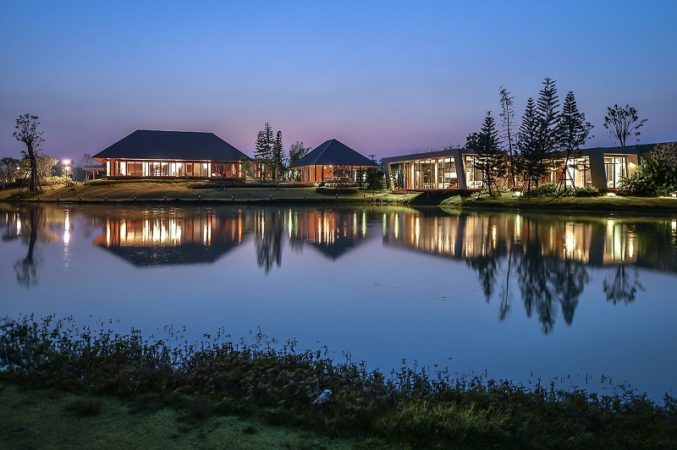
Retirement homes in Chiang Mai have everything retirees need, from spas to elderly care, and from medical care for common sickness to bedridden care, chronic pain care, and Alzheimer’s care.
Starting prices in Chiang Mai run from the low tens of thousands of baht up to around THB52,000 per month at the more luxurious homes.
Baan Lalisa is known for its medical care services. They have in-house medical staff that take care of retirees with medical conditions. The facility does not publish a fixed rate, so contact them for a current quote.
They are also one of the larger retirement-home operators in the country, with multiple branches including in Chiang Mai.
If you prefer to stay in a peaceful environment, you can check out Vivo Bene Village in Doi Saket. Here is like living in a small village of retirees with a lot of facilities and activities such as haircuts, darts, and pétanque.
Alternatively, you can check out Care Resort Chiang Mai in Mae Rim. It’s very big and spacious here with a lake and fishponds inside where you can do fishing, gardening, playing board games, or singing with other retirees inside.
In case you want to live close to the city center, you can check out Ban Sabai Village. It’s a luxurious retirement home with a price starting at around THB52,000 a month. Here you can easily get inside the city during your free time.
They also provide a city tour twice a month as well.
Pattaya
Pattaya is a beach town in Chon Buri. It’s one of the most popular destinations in Thailand for expats and retirees.
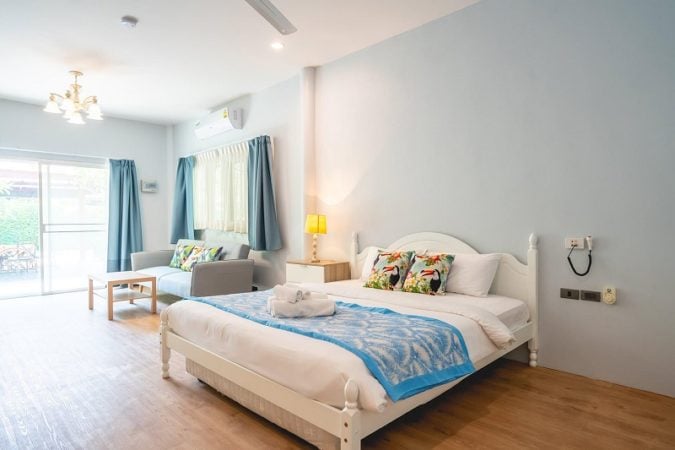
Retirement homes here are shared houses, but you do get your own private room. However, it might not be as spacious as in Chiang Mai or Buriram.
You can check out Homerly Senior Living, a retirement home that offers private rooms with facilities for elderly care. All of the rooms are wheelchairs accessible. They also have regular clubhouse meetings for social activities.
If you want to eat organic vegetables and have access to full-time nursing services, you might want to consider HCS Nursing Home Health Services Pattaya.
Phuket
There aren’t many retirement homes available in Phuket. Instead, retirees here prefer to hire a full- or part-time nurse to take care of them in their own homes.
Carewell Service is one of the few retirement homes available on the island. It’s a full-service retirement home for retirees who need assisted living, including those with Alzheimer’s, dementia, or who suffer from strokes or other diseases.
Buriram
Buriram is a province in northeastern Thailand. The province has been developing quite quickly and is known for its football teams Buriram United, Chang Arena, and Chang Circuit.
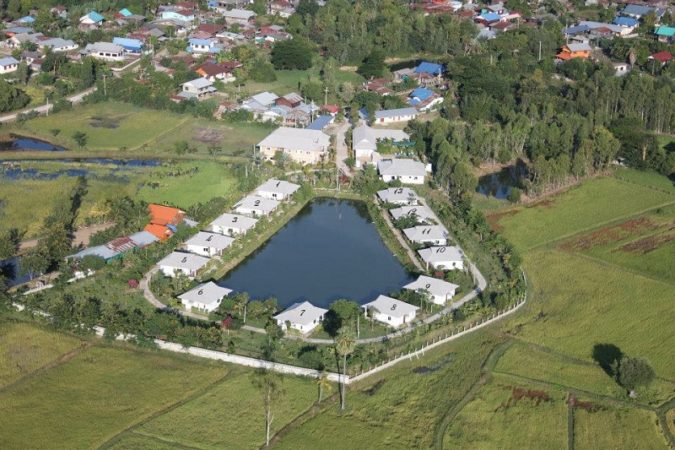
You will find Lanee’s Residenz, a retirement home owned by a Swiss-Thai couple in Buriram. Since it’s quite far from the city center, Lanee’s Residenze is good for those who want to live in peace.
This retirement home offers private houses and three meals per day. There’s also a hospital only three kilometers away.


Retirement Condos in Thailand
There are mainly two options for getting condos in the country. You can get a 30-year lease for a condo or you can buy a condo in Thailand outright.
On the other hand, there are also retirement condos. Retirement condos come with full-time medical staff, offer wheelchair access, and are designed specifically for the elderly. These condos are mainly for the elderly who can help themselves but want to live in a place that caters to them.
One example of these retirement condos is Naya Residence in Nonthaburi.
How About Nursing Homes?
Retirement homes and nursing homes are very similar in Thailand. In fact, many retirement homes in the country act as nursing homes. This is because many of them have in-house healthcare professionals, physical therapists, and nutritionists, all of whom can help with any of your medical needs.
However, when it comes to end-of-life care (palliative care), you need to contact each nursing home individually to see if they offer this kind of care. While they might offer it, they probably won’t advertise it.
The idea of end-of-life care in Thailand is a sensitive issue among Thais. Normally, end-of-life care is done by family or at the hospital.
Who Regulates Elderly Care Facilities in Thailand?
Elderly and dependent-care facilities in Thailand are licensed by the Ministry of Public Health’s Department of Health Service Support, which oversees this category of care business. The legal basis is the Health Establishment Act B.E. 2559 (2016), with a 2020 Ministerial Regulation setting standards for the premises, safety, and services, staffing included. A care home that starts treating patients medically, such as taking in psychiatric patients, needs a separate licence under the Sanatorium Act B.E. 2541 (1998), which covers hospitals and clinics. In practice, standards and staffing still vary between facilities, so a license is a starting point, not a guarantee. Always visit in person before you commit.
One thing that license does not cover: Thai law sets no minimum staff-to-resident ratio for elder-care facilities. Ask directly how many caregivers are on shift per resident, and ask separately about the overnight shift, since that’s where facilities most often cut corners. As a benchmark, Baan Kamlangchay, a dementia-care home near Chiang Mai, publicly reports an effectively one-on-one caregiver ratio around the clock. Most retirement homes run leaner than that, which isn’t automatically a problem, but you should know the number before you compare prices.
Does Health Insurance Cover a Retirement Home or Nursing Care?
Almost certainly not, and this catches a lot of families off guard. Standard international health insurance, the kind you carry to meet the O-A visa’s mandatory insurance requirement described above, is built to pay for treating an acute illness or injury. It isn’t built to pay for someone to live in a care facility for the rest of their life.
Cigna Global’s own Close Care policy rules state this in plain terms: “we would not cover the costs of nursing care (such as accommodations, meals and living expenses) or of any other form of treatment in a residential or elderly care facility even if the treatment is medically necessary and/or provided by a recognized medical practitioner.”
AXA’s SwitchCare policy follows the same pattern, just with more visible edges. It includes an optional endorsement for home nursing after a hospital stay, but only if a specialist prescribes it, only starting immediately after discharge, and only with one qualified nurse providing medical care rather than personal assistance. Its separate hospice and palliative care endorsement only activates after a 12-month waiting period. Neither pays for ongoing, indefinite custodial care.
Tip: Treat long-term care as a separate line item from health insurance, not something your existing medical plan already covers. Fund it from savings, a portable long-term-care insurance policy from your home country if one exists, or family support, so a long-term-care need doesn’t drain the medical insurance you rely on for everyday health costs.
Expat Health Insurance Comparison
Your medical plan still matters.
Long-term care sits outside it, but hospital bills don’t. Compare Cigna, Luma, AXA, April and ACS side by side, including plans picked for retirees.
Compare health insurance plans →
Not sure what your plan covers? Carsten Creutzburg is an independent insurance broker who lives in Thailand and has more than 20 years in the insurance industry in Germany and Asia. Tell him what you need and he’ll send you up to three quotes. His advice is free. Get free quotes from Carsten (Sponsored)
If You’re Caring for an Aging Spouse
If you’re the healthy spouse rather than the one who needs care, you’re likely watching your partner’s needs grow and working out how much you can handle yourself before you need outside help.
Thailand actually makes the early stages of this easier than most Western countries, simply because part-time, professional help is affordable enough to bring in well before a crisis. A caregiver for a few hours a day, in the THB1,200-to-THB2,200 range covered above, can take over the physically demanding parts (bathing, transfers, overnight checks) while you stay the one managing medication, doctor visits, and decisions.
The honest turning point toward a retirement or nursing home usually comes when overnight care becomes constant rather than occasional, when the healthy spouse’s own health starts to suffer from the strain, or when medical needs exceed what an in-home caregiver is trained or licensed to handle. If you reach that point, look for a home that also caters to your spouse’s care level today, not one you’d need to move them out of again in a year.

Good to Know: if your spouse’s residency in Thailand depends on your visa, a move into full-time residential care doesn’t usually change their visa on its own. Confirm with an immigration lawyer before you assume nothing changes, especially if the move affects where they are actually registered as living.
Now, on to You
We hope that this article answered all your questions about finding a retirement home in Thailand.
Remember that each retirement home has their own pros and cons. You should visit each retirement home in person and see for yourself whether you like it or not.
If you’re not sure which one to choose, you can stay with them for a month or two before committing to a long-term contract.
Frequently Asked Questions
How much does a retirement home in Thailand cost?
It varies widely by city, room type, and care needs. Budget shared arrangements can start in the low tens of thousands of baht per month, while full-service homes with private rooms in Chiang Mai start from around THB52,000 and climb past THB100,000 once hands-on nursing care is added. Advertised starting prices usually cover only a shared room and breakfast, so get an itemized quote for your situation.
Where are most retirement homes for expats located?
Chiang Mai has the largest concentration of expat-friendly retirement homes, followed by Pattaya. Bangkok, Phuket, and Hua Hin each have a handful of options, with a few facilities further afield for those who prefer a quieter, rural setting.
Do I need a retirement visa to live in a retirement home?
In most cases, yes. Long-term foreign residents typically use the Non-Immigrant O-A retirement visa, which requires being 50 or older and either THB800,000 in a Thai bank account or THB65,000 a month in income, plus mandatory health insurance. Many retirement homes have staff who help residents with visa paperwork and 90-day reporting.
What is not included in the advertised starting price?
Advertised starting prices usually cover only a shared room, breakfast, cleaning, and basic facility access. Private rooms, lunch and dinner, nursing hours, transportation, and medical treatment are typically extra and quoted based on your health and care needs.
How much does nursing care cost on top of the room package?
Personal nursing is billed separately and rises with the hours of care needed, from part-time daytime support up to round-the-clock one-on-one care. At one Chiang Mai facility, published care tiers run from around THB27,000 a month for a few shared hours a day to THB130,000 for 24-hour one-on-one care. Always get a written quote for your specific care level before signing.
Are Thai retirement homes regulated?
Elderly and dependent-care facilities fall under the Ministry of Public Health’s Department of Health Service Support, which licenses this category of care business. Standards and staffing still vary between facilities, so a license is not a substitute for visiting in person. Following the October 2026 closure of a Kanchanaburi home, DHSS is inspecting all of the roughly 1,200 licensed elderly care facilities over two months.
Can I move in without a long-term contract?
Most facilities offer short stays, from a few days up to several months, which is useful for a trial period, recovery after surgery, or respite care while family is away. A short trial before committing to a long-term contract is worth the extra cost.
What should I check before choosing a retirement home?
Visit in person at different times of day, talk to staff and current residents, try the food, and confirm the distance to your family and your preferred hospital. Ask for a full itemized quote based on your age and health condition, since starting prices rarely reflect what you will actually pay.
Does health insurance cover a retirement home or nursing care?
No. Standard international and local expat health insurance, including the coverage required for the O-A retirement visa, excludes long-term custodial care. Insurers like Cigna Global explicitly exclude nursing homes and residential elder-care facilities. Budget for long-term care separately, from savings or a dedicated long-term-care policy, rather than assuming your medical insurance has you covered.
Can I hire a private caregiver directly instead of going through a retirement home?
Yes. Dedicated home-care agencies like ElderThai and Health at Home in Bangkok send caregivers directly to your own home, starting from around THB1,200 for a four-hour visit or THB19,900 a month for lighter, part-time support. It usually costs less than a full retirement home, but you take on the responsibility of scheduling and finding a replacement if a caregiver is unavailable, which an agency or retirement home otherwise handles for you.
Sources Cited
- Ministry of Foreign Affairs, Non-Immigrant Visa “O-A” (Long Stay): retirement visa financial and insurance requirements.
- Ban Sabai Village, Senior Residence prices: published room and care rates.
- Ministry of Public Health, Department of Health Service Support, elderly care facility standards and licensing: licensing under the Health Establishment Act B.E. 2559, the 2020 standards regulation, 1,203 registered facilities, checking a home’s licence, and the penalty for running an unlicensed home.
- Department of Health Service Support, Tha Muang, Kanchanaburi closure: licence revocation, licensed vs actual floor area, Sanatorium Act B.E. 2541, and the nationwide two-month inspection order.
- Department of Health Service Support, Nonthaburi inspection: licensed vs actual bed count and unlicensed buildings.
- The Nation: press report naming Sothornchai Nursing Home, its 129 beds against 50 approved, and the 7 October 2026 revocation date.
- Cigna Global, Close Care Policy Rules (2024): exclusion of nursing-home, custodial, and residential elderly-care costs from standard health insurance.
- AXA, SwitchCare Policy Wording: scope and limits of the home-nursing and hospice/palliative-care endorsements.
- iLaw Asia and Herrera and Partners: the Health Business Establishment Act B.E. 2559 and its Ministerial Regulation on elderly and dependent care.
- ElderThai and Health at Home: published Bangkok in-home caregiver pricing.
- Baan Kamlangchay: staffing ratio for a Chiang Mai dementia-care home, cited as a benchmark.


 Deutsch:
 Français:
 Español: